Featured Member

Updated: Aug 13
Issue#14
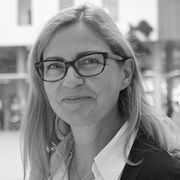
Laura Sbaffi
European/African Region
United Kingdom
University of Sheffield
School of Information, Journalism and Communication
iSchool is member since 2009
Hello Laura! Please tell us a bit about you!
I am a Senior Lecturer in Health Informatics at the University of Sheffield, which I joined in 2016 and where I am currently serving, among other roles, as Postgraduate Research Lead for the School of Information Journalism and Communication. My research sits where health informatics meets information behaviour. I study how people find, judge and act on health information, with a particular focus on unpaid caregiving and on communities that tend to be left at the margins of digital services.
I arrived here by a rather unusual route. I am originally from Italy, from the Marche region on the Adriatic coast, and my first degrees and my PhD were in Earth and Marine Sciences, split between the University of Trieste (Italy) and the University of Cambridge (UK). For the best part of fifteen years I was a palaeoceanographer, reconstructing past Mediterranean climates from deep-sea sediment cores to aid the modelling of future climate changes, and later worked as a research scientist at Geoscience Australia. Then, in 2012 I decided to go back to academia (my first and strongest love!), so I completed an MA in Library and Information Management at Manchester Metropolitan University and changed discipline altogether.
Your research focuses on the digitisation of health services globally - What led you to choose this research focus?
It began as a methodological curiosity and became something rather more pressing. What I loved about palaeoceanography was reading a signal out of noisy, incomplete evidence. When I retrained, I found the same problem waiting for me in health information, except that the noise is human, and the consequences are immediate.
My early work in the field, with Professor Jenny Rowley, was on trust and credibility, specifically how people decide whether to believe what they read about health information online. At the time much of that literature treated quality as a property of the information itself. It became clear to me that the more interesting question was a distributional one, so not “Is good information available?” but “Who can actually reach it and in what form?”.
That question travels well, which is how the work became global almost by accident. It took me to rural Malawi, working with informal carers of people living with HIV/AIDS on an intervention we co-created with them rather than designed for them; to Uganda, on shared health records; and to South Africa, where I contributed to deriver and validate COVID-19 triage tools for emergency departments in a middle-income setting, because the scores developed in well-resourced systems simply did not transfer. It also brought me to my adoptive home, to older and LGBTQ+ unpaid carers in England navigating a social care system that has digitised around them. The thread running through all of it is this that digitisation is sold as efficiency, but efficiency for a system very often means new, invisible labour for the person at the edge of it. Somebody has to do the work of translation, and it is usually a family member, a friend, a neighbour. I think that work deserves to be counted, valued and facilitated.
At your iSchool in Sheffield, several researchers are conducting research on health informatics. Could you tell us a little more about your iSchool?
Sheffield has had health informatics in its bloodstream for far longer than it has been an iSchool. What I would most want people to know is that we are not a single-method group. Within the School you will find qualitative information-behaviour researchers sitting alongside colleagues building machine learning models on emergency department data, social media analysts, and people working on digital inclusion and data ethics. Those conversations are occasionally uncomfortable and consistently productive.
The second thing is that we are no longer an Information School in the narrow sense. We have merged with Journalism Studies to become the School of Information, Journalism and Communication, which puts information scientists in the same corridor as journalists and communication scholars. For anyone working on trust, misinformation and how health knowledge actually circulates, that is an extremely good neighbourhood to live in!
We also benefit from sitting inside a large research-intensive university, so we collaborate widely with the School of Medicine and Population Health, the Healthy Lifespan Institute and the Centre for Care, among others. Also, we have a large, international doctoral community, which as PGR Lead, I would argue is the real engine of the place.
Your iSchool was one of the first in Europe to join iSchools in 2009. Since then, the number of European and African schools has grown significantly, and today they form their own iSchools region. You took on the role of Regional Chair for the European/African Region in early 2026. Can you tell us a little more about the region and your impressions of it?
The first thing to say is that the region is enormous. It runs from the Nordic countries to South Africa, and from Portugal to Turkey, and it contains institutions with very different histories, funding environments, languages of instruction and relationships to their national systems. A long-established European school with a century of library science behind it and a young African school building an information programme from the ground up are both iSchools, and both belong here, but their needs on any given Tuesday are not the same. Holding that range together without flattening it is the interesting part of the job.
My strongest impression since taking on the role at the start of 2026 is how much appetite there is for connection, and how little of it is currently structured. Colleagues are remarkably generous with their time; what they lack is a low-cost, reliable way of finding each other. Most of what constrains us is logistical rather than intellectual - time zones, travel funding, visas.
So my priorities are deliberately practical. Make membership tangibly useful for smaller and newer schools rather than only for those already well connected. Build doctoral and early-career links, because those outlast anyone’s term of office. And ensure that the Africa–Europe relationship runs in both directions, rather than being framed, as it too often is, as one region assisting another.
What benefits do you see in belonging to the global iSchools Organization? How has it impacted you personally?
Practically, it gives you a peer group you would otherwise have to invent. When you are redesigning a curriculum, making an internal case for a new programme, or trying to judge honestly whether your doctoral provision is any good, it is enormously valuable to compare notes with schools facing the same question inside a completely different national system. The iConference is the other obvious benefit; I have reviewed for it for years and chaired the posters track in 2025, and it is still where I meet the people I later end up collaborating and writing with.
Personally, the effect has been more specific than that. I changed discipline in mid-career, after many years in the natural sciences. In many academic communities that is quietly treated as a liability, something to be explained away. The iSchools community treats interdisciplinarity as the normal condition rather than a suspicious one; nobody has ever asked me to justify why a former marine geologist is studying carers’ information needs. That gave me permission to bring my whole background with me instead of hiding half of it, and I do not think I would have built the research programme I have without it.
If you could give just one advice to future information scientists, what would it be?
Go and meet the people your data is about! It is very easy in our field to become an expert in the record and never once encounter the person the record describes. I have never learned anything important about carers’ information needs from a dataset that I had not first learned, in a cruder and far more useful form, by sitting in a room with carers in Malawi or in South Yorkshire. Ask early who is missing from your sample and why, and be wary of any finding you would be embarrassed to explain to the people it is about.
And if I am allowed a second piece of advice: do not assume your background is a detour. Mine looked like one for the best part of a decade. It turned out to be the most useful thing I brought with me.
Thank you very much, Laura!
Featured Members is an iSchools Feature series spotlighting members of iSchools who are part of the development and organization of thought provoking projects or conferences. Please contact admin@ischools-inc.org in case you would like to be featured as well.


Comments