Featured Member

Issue#16

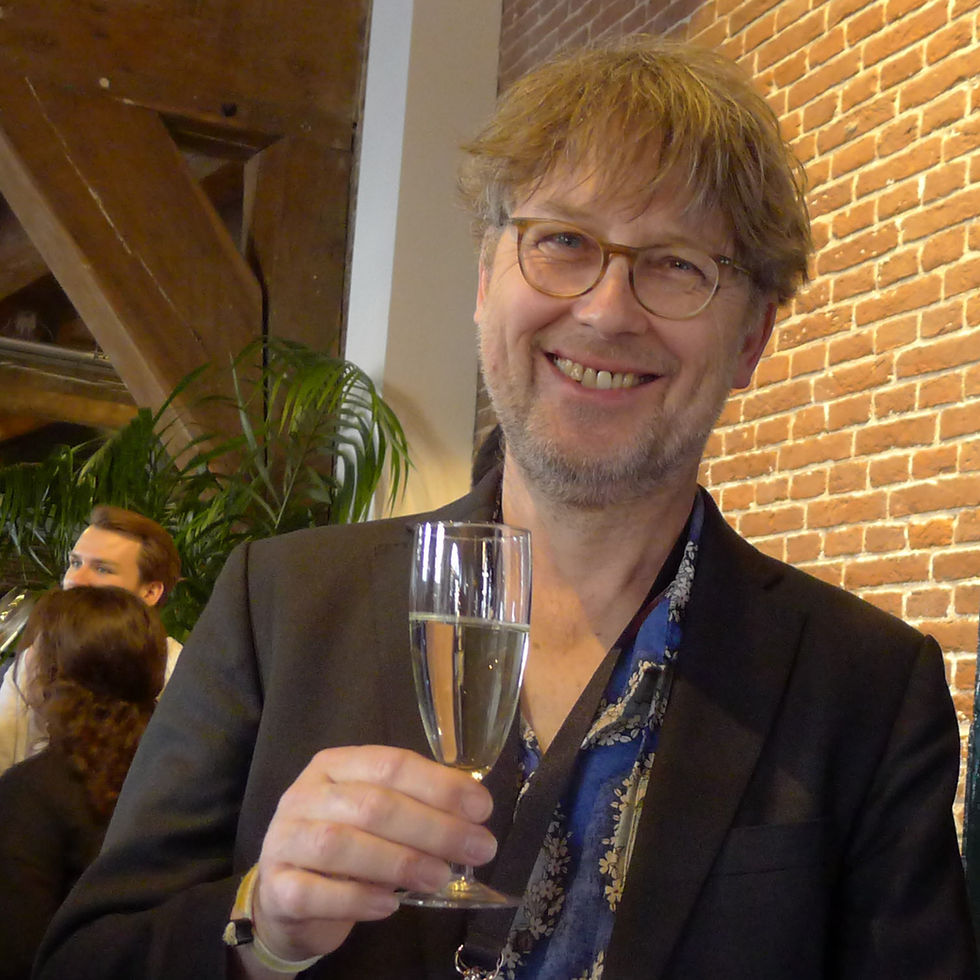
Jie Ma
Asia Pacific Region
China
Jilin University
School of Business and Management
iSchool is member since: 2019
Hello Jie Ma! Please tell us a bit about you!
I am Jie Ma, Vice Dean of the School of Business and Management, Jilin University, Kuang Yaming Distinguished Professor and Doctoral Supervisor. I also serve as Deputy Editor-in-Chief of Journal of Information Science. I was a visiting scholar at the University of Illinois Urbana-Champaign.
My research covers data management, information collaboration, reading promotion, smart services, and knowledge organization. I employ mixed quantitative and qualitative methods including empirical testing, complex network analysis, content analysis and expert evaluation to examine a range of issues concerning information ecology, knowledge organization, intelligent information services and reading promotion. My recent work focuses on reading services for people with developmental dyslexia, with the aim of building a system of specialized public reading services tailored to their needs and coordinated across multiple stakeholders. Another focus is data management, particularly open government data and data from multiple sources in smart cities. In this area, I develop models to assess data quality and value, investigate the factors and mechanisms that enable value to be realized from data, and explore ways to integrate heterogeneous data from multiple sources. I have led more than 20 research projects at various levels and published over 120 academic papers.
I am actively engaged in academic community service. I hold positions such as council member and vice chair in several national academic societies and their subcommittees.
Your research covers areas such as data management, information collaboration, reading promotion, smart services, and knowledge organization. Which of these areas are you currently most interested in, and what motivates your work?
Among these areas, data management and smart services currently the ones I am most interested in and devote the most time and effort to.
I have long viewed data management as a core thread weaving together the many subfields of information resources management. As digital and intelligent technologies advance rapidly, the discipline of information resources management continues to evolve. It needs to deepen its theoretical foundations internally while extending its research boundaries outward. This need for disciplinary renewal is my first motivation for continuing to explore data management.
There is also an urgent need for this research in practice. Public cultural institutions, open government data initiatives, and various smart information service platforms all face concrete challenges including data governance, resource organization, and trusted data circulation. Research in our discipline cannot stay confined within academia; it must produce theoretical frameworks and workable solutions that address practical pain points. These practical needs continually inspire me to root my research in real world applications.
Finally, educating the next generation of researchers and professionals is another important reason I continue this work. Data management and smart services are dynamically vibrant research areas. Students pursuing advanced studies in these area can engage with diverse research topics and access a broader range of career pathways. More importantly, drawing on the perspective of information resources management, they are well placed to tackle data governance issues of the digital age and make meaningful contributions to society.
Taken together, the internal imperative for disciplinary advancement, practical demands from real-world settings, and the prospect of seeing young scholars grow through teaching jointly sustain my long-standing commitment to research in data management.
You are leading a research project on public reading services for people with reading difficulties. What inspired this project, and how can information schools contribute to making reading and information services more inclusive?
China continues to strengthen its public cultural service system continues to develop in depth, and the national reading strategy has been fully implemented. Safeguarding the basic cultural rights of people with specific needs and advancing equitable, inclusive public reading services stand as key markers of social civilization and modern public governance. Reading serves as the foundation for individuals to acquire knowledge, develop understanding and achieve lifelong development. It also underpins educational equity and fosters social inclusion. This broader contextual backdrop drew my attention to public reading services for groups with reading difficulties specifically those with developmental dyslexia), which forms another key area of my research.
However, our field investigations reveal considerable room for improvement in this domain. Specialized service provision remains insufficient, evidence-based interventions are underutilized, and multi-stakeholder collaboration mechanisms are still evolving. Existing services cannot fully meet the developmental needs of people with reading difficulties, particularly school-age children, which poses certain challenges to the high-quality development of public cultural services. Library services currently focus largely on infrastructure support and advocacy for rights protection; there remain gaps in deeply integrating scientific identification and intervention techniques into routine reading service workflows. Against this backdrop, building a specialized public reading service system athat provides targeted support through collaboration among multiple stakeholders is a research undertaking with practical value — the origin of this project. Its core approach is to deeply integrate scientific identification, effective intervention and public reading services. It matches customized resource provision to diverse user needs and improves service performance through multi-party collaboration. The research centers on three key priorities: localizing identification tools, systematizing service frameworks, and normalizing cross-stakeholder cooperation.
Information schools can contribute to more inclusive reading and information services on multiple levels.
First, drawing on core theories of information resources management, we conduct empirical research grounded in user information behavior, knowledge organization and smart services. We develop localized assessment tools and supporting service frameworks tailored to the differentiated needs of people with reading difficulties. This work lays solid theoretical and methodological foundations for inclusive public reading services and provides scientific support for library service design.
Second, information schools leverage their strength as interdisciplinary platforms. They connect library practitioners, researchers in cognitive science and basic education, and technology developers to bridge the gap between theory and practice. We translate identification and intervention methods into actionable service workflows and practical tools usable within libraries.
Third, talent development remains central to our long-term mission. We embed inclusive information services into coursework and practical training to cultivate new generations of information professionals. We transmit the principles of information equity and inclusive service to frontline practitioners, continuously refining the ecosystem of public reading services.
Ultimately, information schools keep people at the center of work. Through information organization and information services, we bridge information divides, help diverse groups gain equal access to reading and cultural resources, and advance inclusive information services for all.
Could you tell us a little more about the information science community at Jilin University and what makes its teaching and research distinctive?
The information science community at Jilin University is anchored by the first-level discipline of Information Resources Management. It has built a full talent development pipeline spanning undergraduate, master’s and doctoral programmes, supported by integrated teaching and research frameworks. Its research portfolio covers information science, library science, archival science, digital humanities and data management. Boasting a profound academic legacy, the discipline keeps pace with domestic and international research frontiers and actively engages in academic exchanges and mutual learning. Strong backing from the university and the school provides a solid foundation for its pedagogical innovation and research exploration.
Jilin University Library and Archives form a vital practice-focused community for information services, and serve as training sites for future professionals in Information Resources Management. Drawing on authentic collections and operational cases, they support case-based instruction and empirical research. Serving as the university’s hub for literature and knowledge services, the University Library offers abundant resources to support the discipline’s literature reviews, data collection and scholarly inquiry. Together, these two institutions underpin the discipline’s efforts to translate research concepts into real-world information service practice.
This synergy stands as the most distinctive feature of the discipline’s teaching and research. The disciplinary community develops theoretical frameworks and cultivates professional talent, while the Library and Archives provide real-wrold service settings and resources. Their collaboration enables deep integration of theoretical inquiry, talent development and frontline information service practice.
As Chair of AP-iConference 2026, what inspired you to take on this role? What can participants look forward to at this year’s conference in Thailand, particularly around the theme “AI-Empowered Information Science: Bridging Disciplines, Transforming Futures”?
I accepted this appointment out of a passion to serve the Asia-Pacific academic community and foster sustained exchange and connections among regional peers. Having long engaged with the Asia-Pacific iSchools community, I have witnessed a rich diversity of rsearch grounded in local contexts. Even so, there remains ample room for scholars to engage in deeper dialogue and exchange research insights. This role is fundamentally a commitment to serving the community. It seeks to build an open regional forum that brings together researchers, educators and practitioners in information science across the Asia-Pacific, enabling peers to discuss a broad spectrum of cutting-edge disciplinary topics. To contribute to the collaborative development of the Asia-Pacific iSchools community, strengthen bonds within this regional academic collective, and explore the long-term transformation of the discipline — this is the core motivation behind taking on this responsibility.
Notably, the theme of this conference also holds strong academic appeal. Artificial intelligence is driving profound transformations within information science. Breaking down disciplinary boundaries and exploring how technology reshapes information practice are valuable directions for research at the forefront of our field. This makes me eager to help shape the academic program around of this theme and gain insights through the process.
Participants can look forward to an academic event rooted in the Asia-Pacific region and grounded in the iSchools community. Hosted at Khon Kaen University in Thailand, this conference brings together researchers, students and practitioners in information and data science across the Asia-Pacific.Under the theme “AI-Empowered Information Science: Bridging Disciplines, Transforming Futures”, participants will explore how artificial intelligence advances cross-disciplinary dialogue and re-examine the organization, access and preservation of information, and the delivery services. The conference also features a dedicated Student Symposium for emerging researchers, offering a valuable opportunity for participants to present work, receive peer feedback, and build academic networks across the Asia-Pacific. Here, participants can engage with cutting-edge research, connect with fellow scholars, and collectively explore new possibilities for the future of information science.
If you could give just one advice to future information scientists, what would it be?
Keep an open perspective across disciplines, integrate ideas and methodologies across diverse fields, and leverage emerging technologies like artificial intelligence to broaden approaches to research and practice. Continue to explore the discipline’s core ideas in depth expand its research boundaries, and demonstrate the discipline’s value in building the information society.
Thank you very much, Jie Ma!
Featured Members is an iSchools Feature series spotlighting members of iSchools who are part of the development and organization of thought provoking projects or conferences. Please contact admin@ischools-inc.org in case you would like to be featured as well.


Comments