Featured Member

Issue #13
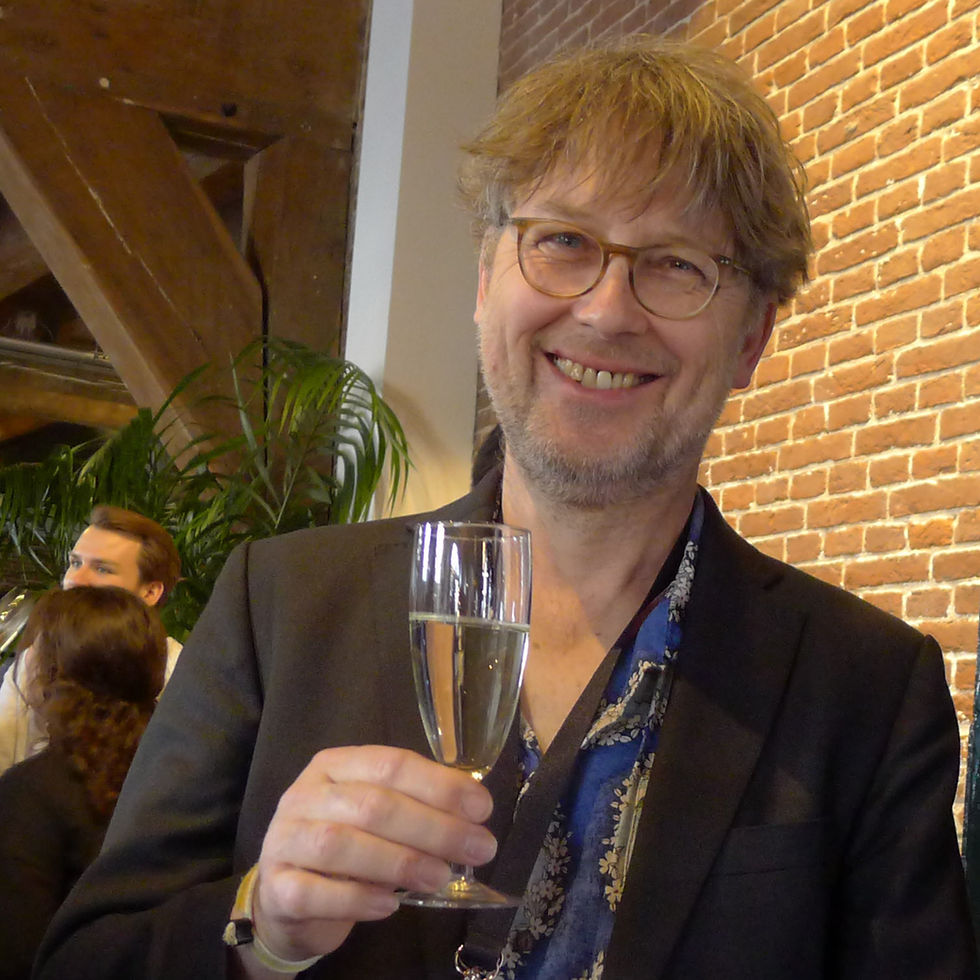
Udo Kruschwitz
European/African Region
Germany
Universität Regensburg
Institute for Information and Media, Language and Culture
iSchool is member since 2019
Hello Udo! Please tell us a bit about you!
I am the Chair of Information Science at the University of Regensburg. I took up this position about 7 years ago (how time flies!). I have a background in Computer Science and have always been fascinated by Natural Language Processing (NLP), i.e. how to make computers understand languages. This interest actually goes back a long time, and I remember how, as a small team, we conducted a research project at school in the 1980s in which we developed a LISP program that would automatically parse simple English sentences. At that time such systems were extremely brittle, and providing a sentence that did not exactly follow the expected input format would result in the entire analysis failing. It looks like this subject area has followed me ever since.
You originally came from the field of computer science. How did you discover your passion for information retrieval?
Information Retrieval (IR) is not miles away from Natural Language Processing, but somewhat surprisingly there are two distinct research communities. My background is a bit unusual in that I have a foot in both communities. I first got properly involved in the field of Information Retrieval when joining Essex University in 1997 on a project with British Telecom. The idea was to develop a dialogue system that would allow a user to search a classified directory (the Yellow Pages). Based on some information need expressed by the user in either typed or spoken format (such as “I need a plumbing service in Wivenhoe that does not charge a call-out fee”) the user would then be guided through the space of possible matches. This sounds simpler than it was back then. Some queries would be very generic and required the system to narrow down the request, in other cases there could be ambiguous needs and yet in other cases the query might have been so specific that no matches could be found. The solution was a mix of NLP and Information Retrieval. Since then I have been involved in a variety of research projects that sometimes had a slightly stronger focus on Information Retrieval and other times they were more dominated by NLP problems. This is also true for PhD projects I had the pleasure of (co-)supervising. And that is not limited to research. One of the fun aspects of being an academic is that you do your fair share of services to the community. I have, for example, for many years been on the steering committee of the British Computer Society’s Information Retrieval Specialist Group (BCS IRSG). Among other things we coordinate the annual European Conference on Information Retrieval (ECIR), the European flagship IR conference. Interestingly, Information Retrieval felt like a bit of a niche academic interest for decades but the recent rise of Retrieval-Augmented Generation systems has completely changed this as RAG-based systems all rely on a retrieval component.
After more than 20 years at University of Essex, you moved to the iSchool at the University of Regensburg and took over the Chair of Information Science. What personally convinced you to choose Regensburg? Can you tell us a bit about your iSchool, please?
If you have ever been to Regensburg, then you wonder why not everybody wants to move here. Luckily (for me), the position got advertised and I thought: this is the perfect match for my background. On top of that I knew that the team in Regensburg had a very international outlook and footprint. Despite the Chair of Information Science being a very small team (we are talking about three tenured research-active academics) it is highly visible in the community with many publications in the key research outlets of our field(s).
When I joined Regensburg we were not part of the iSchool consortium yet, and it was one of my very first strategic objectives to make Regensburg an iSchool. In our application we demonstrated that across the institute (IIMSK), i.e. beyond our chair, there is an overarching theme that brings us all together, and that is an interest in exploring, understanding and shaping information behaviour. The interdisciplinary nature of our work is also reflected by the fact that most of our students get a highly interdisciplinary education, be it at Bachelor’s or at Master’s level.
In recent years we invested a lot of energy in making our teaching a lot more international. For example, as part of the iSchools family we set up several Erasmus+ agreements, and just to pick some very recent developments, I am very pleased that this coming winter semester we will send our first exchange students to the University of Padua and expect the first incoming students the following semester. We also started a new Master of Science degree scheme in Human-Centred AI which is entirely taught in English.
You work closely with partners from industry, society, and the healthcare system to translate AI research into practical applications. These include great projects like the AI “Driver's License” and other fantastic knowledge-sharing initiatives such as the Data Science @ Regensburg Meetup which also works closely together with the iSchools European/African Industry and Partnership Section. Can you tell us more about that?
I have long been interested in seeing measurable impact of research. This includes applying academic research in practical applications — ideally with some societal benefit. In the UK such activities are well-supported through the long-running Knowledge Transfer Partnership (KTP) scheme. I am very fortunate to have benefited from and contributed to several KTP projects. A project with what is now Signal AI even managed to pick up the award for best KTP project of the year.
Right now we are involved in several projects that are conducted in collaboration with medical professionals. With the Hygiene Team at the Regensburg University Hospital we explore the adoption of graph-neural networks to prevent outbreaks of multi-resistant germs. With world-leading experts in urology we are working on combining the power of large language models (LLMs) with the unique expertise our colleagues contribute using the paradigm of a ‘human in the loop’. The MedNuggetizer is the first peer-reviewed output that emerged from this line of work, but watch this space for many more results to come.
You mention Regensburg’s AI Driver’s Licence. This is a more lightweight approach to transferring knowledge beyond our ivory tower. Similarly, the Data Science @ Regensburg Meetup falls into that category. This group was set up when I joined Regensburg with the aim of creating a forum where people from industry, students, academics, practitioners and in fact anybody interested can meet informally and learn about the latest developments in the wider area of data science and AI. Together with Jaap Kamps we have now taken that to a new level. In our roles as co-organisers of the European and African iSchools Industry Partnership Section we have organised Data Science Meetups specifically aimed at the iSchools community. For example, last September we took the Data Science Meetup to Tampere, and if you want us to take the roadshow to you, just let us know and we see what we can do. Just a side note: our next Meetup is coming up in June and one of the confirmed speakers is Sophia Althammer who works as a senior researcher at Cohere. This time we will be in Munich. Come and join us (in person or via Zoom).
You are supporting the organizing teams of various conferences in the area of information retrieval every year. One of those conferences is Search Solutions in London in November. Can you tell us a bit about it?
Thanks for asking, this is indeed an event very close to my heart. I mentioned ECIR earlier on, the European Conference on Information Retrieval. In 2006 this conference was organised in London and a novel feature (that is now quite common at most conferences in our field) was the addition of a dedicated Industry Day. That turned out to be highly popular, especially among the local crowd. We thought: why not run this as an annual event. However, given ECIR travels around Europe we decided to set up a new regular event that would take place in London and which we called Search Solutions. This year will therefore be a special anniversary edition of Search Solutions as we have been running this for 20 years! The call for contributions just went out. As every year we expect a good mix of practitioners, academics, students etc. in November in London. There will likely be some fee waivers for students this year, so watch out.
If you could give just one advice to future information scientists, what would it be?
Do not expect that the future can be planned. I never expected to become an academic (but I am very happy it turned out that way!). But what can you do? Do take up opportunities that you come across. You never know what lies ahead. There are many chance encounters that could turn out to shape your future. Come along to Meetups, spend a term abroad, volunteer for a student representative role, learn German and listen to another interview I gave recently. The list goes on and on …
Thank you very much, Udo!
Featured Members is an iSchools Feature series spotlighting members of iSchools who are part of the development and organization of thought provoking projects or conferences. Please contact admin@ischools-inc.org in case you would like to be featured as well.


Comments